Coffee Bean Grading has to do with a number of characteristics, one of the most important being size. Not only are larger beans generally more desirable, but bean size , density, and moisture, are all factors that must be taken in to consideration when establishing roast profiles.
Lastly, when buying and selling coffee beans, it is important to verify the representations of the seller.
COFFEE BEAN SIZE GRADING SIEVES
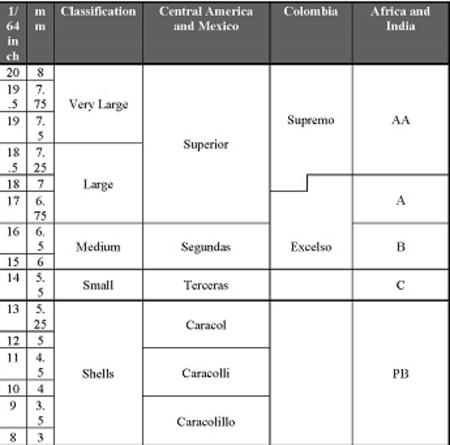
Bean Sizing Sieves are used to separate the coffee beans by 64th of an inch increments, starting with 8/64ths, all the way up to 20/64ths of an inch, or more. Different countries use somewhat different size classifications, and there are different methods available for green coffee grading. The SCAA METHOD and the BRAZILLIAN / NEW YORK Method are both in practice today. (SEE FOOD AND AGRICULTURE ORGANIZATION OF THE UNITED NATIONS) for more information.
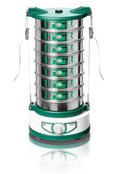
These stainless steel plate coffee bean sieves are designed to fit on a standard sieve shaker. Their rigid construction is designed for accuracy and durability.
"Some say there is an art to great coffee. I don't care how artistic you are; there are too many factors in play. You need the technology."
Forbes Magazine, Bob Stiller Green Mountain Coffee
EVEN SIZE DISTRIBUTION ASSURES A CONSISTENT EXTRACTION RATE. TARGET EXTRACTIONS OF DISSOLVED SOLIDS ARE GENERALLY THOUGHT TO BE BEST BETWEEN 18% TO 22%
THE SMALLER THE COFFEE PARTICLE, THE LESS CONTACT TIME REQUIRED TO ACHIEVE OPTIMAL EXTRACTION. WATER CONTACT TIMES VARY BETWEEN 1 TO 4 MINUTES.UNDER EXTRACTION MAKES FOR A WEAK TASTING COFFEE OVER EXTRACTION RELEASES UNDESIRABLE CHEMICAL COMPOUNDS THAT RESULT IN NEGATIVE TASTE QUALITIES, LIKE BITTERNESS.
REGULARLY SCHEDULED COFFEE GRIND SIZE ANALYSIS TESTS, PROVIDE ASSURANCE THAT A GRINDER IS FUNCTIONING CORRECTLY,
COFFEE BEAN SIZE
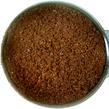
COFFEE GRIND SIZE
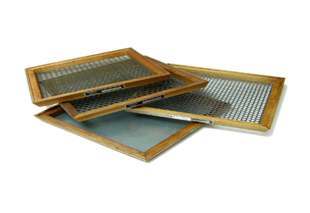
WOODEN HAND SCREENS
These wooden hand screens
are found in many QC Labs.
They are available in mild steel, or stainless steel for humid environments
STANDARD SIEVE SIZES USED BY MANY OF TODAYS QC LABS HAVE THEIR ROOTS IN A 1958 STUDY , TITLED, 'COFFEE GRINDS II. CLASSIFICATION AND ANALYSIS'
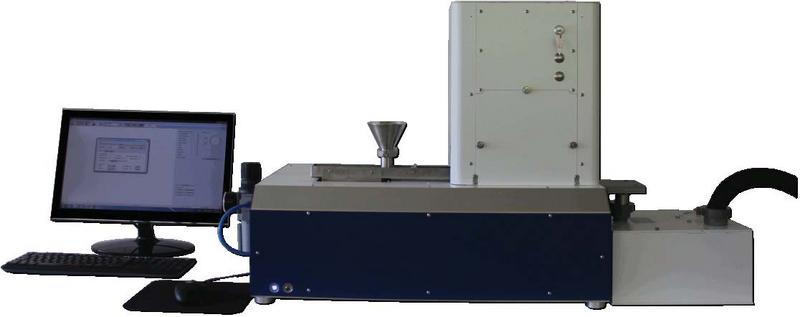
RECENT ADVANCES IN DIGITAL IMAGING TECHNOLOGY, AND POWDER DISPERSION SYSTEMS, HAVE ALLOWED FOR GREATER ACCURACY IN THE ANALYSIS OF SIZE, AS IT RELATES TO GROUND COFFEE.
Particle sizing technology has changed dramatically over the years. The original standards, and those still used by much of the coffee industry worldwide, are based on sieveanalysis.The original hand simulation sieve shakers were engineered to mimic sieving by hand, because that was what the standards were based on.
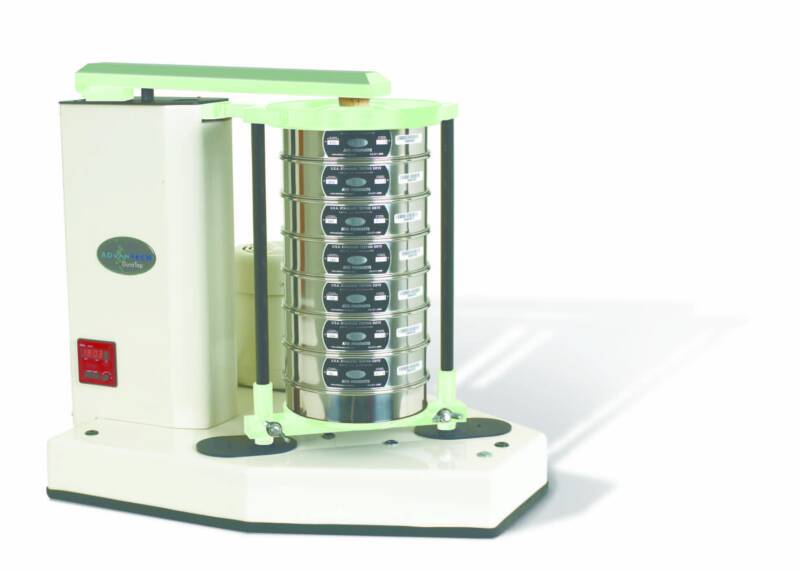
LIKE THE ENDECOTTS M200, AND THE Advantech Varisifter, WHIICH USES LOW FREQUENCY AUDIO SIGNALS TO AGITATE THE SAMPLE. BOTH OF THESE CAN USE SMALL 100 mm DIAMETER SIEVES, MAKING SIEVING, AND CLEANING SIEVES, MUCH EASIER,
REDUCING LABOR COSTS.
Sieve analysis is used worldwide by many industries,in part due to the low cost. Many industry standards, as well as those in coffee industry, were originally developed using sieve analysis.
A sieve is constructed of wire mesh for cost reasons. The resulting square apertures are measured on the lateral, and sieve tolerances are relative to the grade of sieve selected.
Although sieving does provide useful information relative to a products size, it is based on the assumption that particles are spherical. Upon closer analysis, it is apparent that coffee grinds are indeed not spherical.
When performing a grind analysis, it is important to use USA Standard, or ISO / ASTM Mesh Designations, especially when dealing internationally. Some companies as well as countries have their own mesh designations, but ASTM (American Society for Testing Materials) introduced standardized designations in the early 1900's to help eliminate confusion.
#12 1.70mm
#16 1.18mm
#20 850 microns
#30 600 microns
#40 425 microns
#50 300 microns
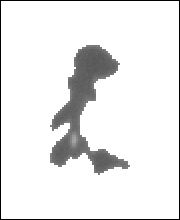
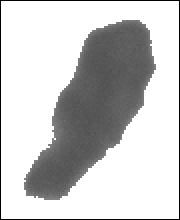
THESE IMAGES ARE FROM ACTUAL FINE COFFEE GRINDS.
NOT ONLY ARE THE PARTICLES NON SPHERICAL, BUT THEY ARE ALSO IN SOME CASES, FLAT.
THE WIDEST PART OF THE PARTICLES LENGTH, IS WHAT DETERMINES THE SIEVE APERTURE SIZE THAT WILL RETAIN THE PARTICLE.
In digital imaging, a virtual maximum inscribed disc, is used to determine a sieve correlation value.
The circular area in red is what would register as the size of the particle. Another tolerance issue with sieving, is the existence of a diagonal, in a square aperture. If a particle is not round, it may end up falling past its' designated aperture, by falling through on the diagonal. Digital imaging will correlate perfectly with sieving results, except for where diagonals are employed.
COMPETITIVE DIGITAL IMAGER
COUNTING PIXELS
OCCHIO DIGITAL IMAGER
COUNTING PIXELS
OCCHIO DIGITAL IMAGER
MAX INSCRIBED DISC
SIEVE ANALYSIS
WITH 6 STANDARD SIEVES
The charts on the left show a comparison between two digital imaging devices, and sieve analysis.
The top two graphs use what is called the equivalent disc parameter, which is somewhat similar to counting pixels. The distributions are very similar.
However, if you look at the third graph,which takes advantage of the maximum inscribed disc parameter, and compare it to the 4th chart, which is sieve analysis, you can see that the maximum inscribed disc parameter, better correlates to sieving results.
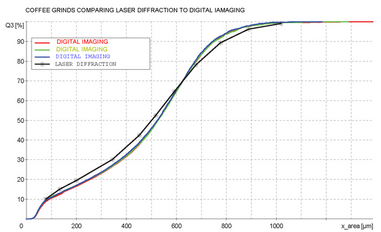
LASER DIFFRACTION
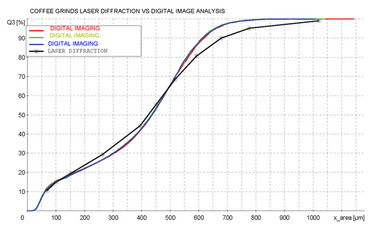
Because sieving is time consuming, messy, and difficult to accurately administer, many larger coffee grinding facilities turned to laser diffraction for their particle sizing needs. Laser diffraction has its' own set of pitfalls however. It does correlate fairly well with counting pixels using digital imaging (SEE BLACK CURVES ON RIGHT SIDE CHARTS), but laser diffraction has been found to skew towards the smaller size. Laser diffraction also makes the assumption that the particles are round, which we already know to be false.